Elegance as Part of the Experience
Understanding Italian wedding dress code is often less straightforward than it may seem. Italian weddings can vary greatly in style and character — from formal celebrations inside historic villas to relaxed countryside receptions, seaside gatherings, or intimate multi-day destination wedding weekends unfolding across several days.
For this reason, Italian wedding dress codes are rarely defined by formality alone. More often, they are shaped by the feeling of the celebration itself: the setting, the season, the time of day, and the experience the couple wants to create for their guests.
A candlelit villa reception may naturally invite timeless evening elegance, while a countryside wedding beneath olive trees may call for softer tailoring, breathable fabrics, and a more relaxed interpretation of sophistication. The same is true for destination wedding weekends in Italy, where welcome dinners, poolside gatherings, and farewell brunches may each require a different approach to dressing.
In this context, elegance becomes less about rigid rules and more about feeling comfortable, appropriate, and naturally connected to the celebration itself.
This guide explores what to wear to a destination wedding in Italy, how Italian wedding dress codes are shaped by venue and style, and how couples can help guests navigate the experience with greater ease and confidence.
Understanding Italian Wedding Elegance
Formal attire can mean very different things depending on personal style, cultural references, and the kind of celebration a couple wishes to create. In Italy, however, elegance has traditionally been associated less with rigid formality and more with refinement, balance, and quality.
This is perhaps why Italian style has remained such a strong reference point around the world for decades. From classic tailoring to luxury textiles, Italian elegance is often admired not because it feels excessive, but because it appears natural, timeless, and effortlessly sophisticated.
When it comes to weddings, this translates into a vision of formalwear that goes beyond the traditional idea of black tie alone. A beautifully tailored linen suit, a silk dress with fluid movement, or the richness of natural fabrics can all feel deeply elegant without appearing overly theatrical.
In Italian style, sophistication is often found in the details: the texture of a fabric, the quality of craftsmanship, the balance of proportions, or the way an outfit moves and feels rather than simply how formal it appears at first glance.
This approach is deeply connected to Italy’s long tradition of tailoring and artisanal excellence, where beauty and practicality have always existed side by side.
Choosing the right Italian wedding guest attire often means balancing elegance, comfort, and the atmosphere of the celebration.

@Audra Wrisley Photography
Creating Atmosphere Through Venue, Style and Dress Code
At Italian weddings, the dress code is rarely chosen as an isolated detail. More often, it emerges naturally from the overall vision the couple wishes to create for their celebration.
Some couples imagine a formal evening celebration inside a historic villa, while others are drawn to the relaxed beauty of a countryside reception, a seaside gathering overlooking the Mediterranean, or an intimate wedding set within a hidden borgo. Each type of celebration carries its own character and naturally influences the overall aesthetic of the event — from styling and floral design to guest experience and dress code.
In many ways, the desired feeling of the celebration guides the venue itself. And once the setting is chosen, the architecture, landscape, light, season, and rhythm of the event begin to influence everything else: the floral design, the styling, the lighting, the music, and naturally, the wedding dress code as well.
This is one of the reasons destination weddings in Italy often feel so harmonious and immersive. Beauty is not created by a single detail alone, but by the coherence between all the elements that compose the experience.
The dress code, therefore, becomes much more than a simple indication of formality. It helps guests feel connected to the tone of the celebration — visually, emotionally, and practically — allowing them to become part of the setting itself rather than simply attending it.
What to Wear to a Villa Wedding in Italy
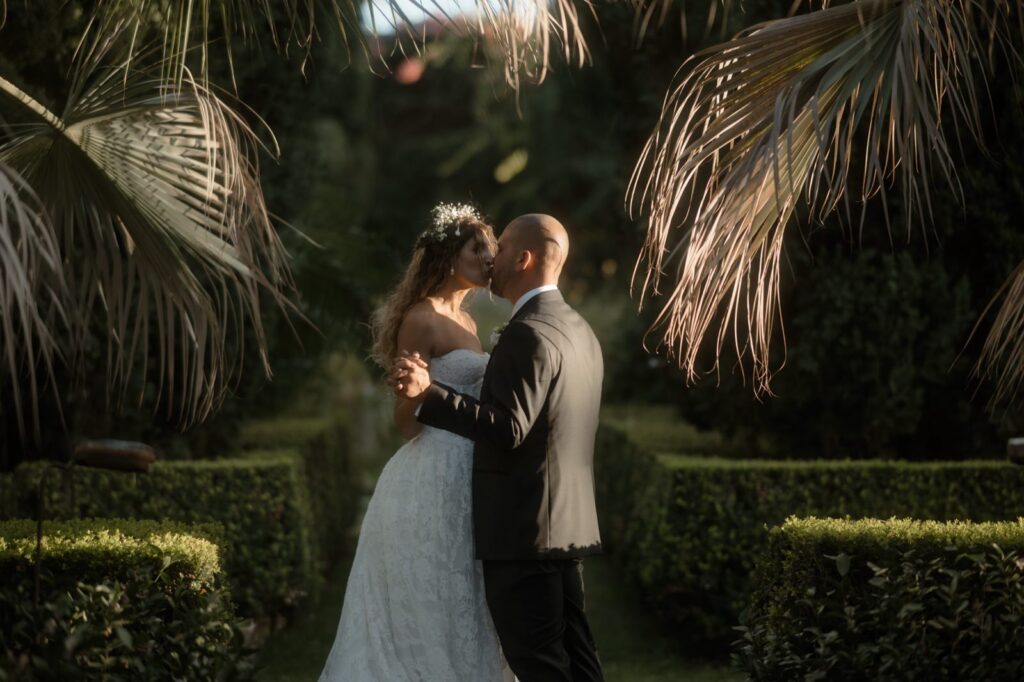
Historic villas naturally lend themselves to a timeless and sophisticated aesthetic. Surrounded by frescoed halls, romantic courtyards, marble staircases, and formal Italian gardens, these settings often inspire a refined interpretation of formalwear that feels elegant without becoming overly rigid.
Black tie celebrations in historic venues tend to embrace luxurious fabrics, impeccable tailoring, and a quieter sense of glamour. Black tuxedos softened by Italian tailoring, silk gowns with fluid silhouettes, velvet dinner jackets, and understated jewelry often feel particularly suited to these environments.
In these spaces, the architecture itself already carries a strong sense of grandeur, allowing elegance to feel polished, cinematic, and naturally integrated into the celebration.

@Morina Foto
What to Wear to a Countryside Wedding in Italy
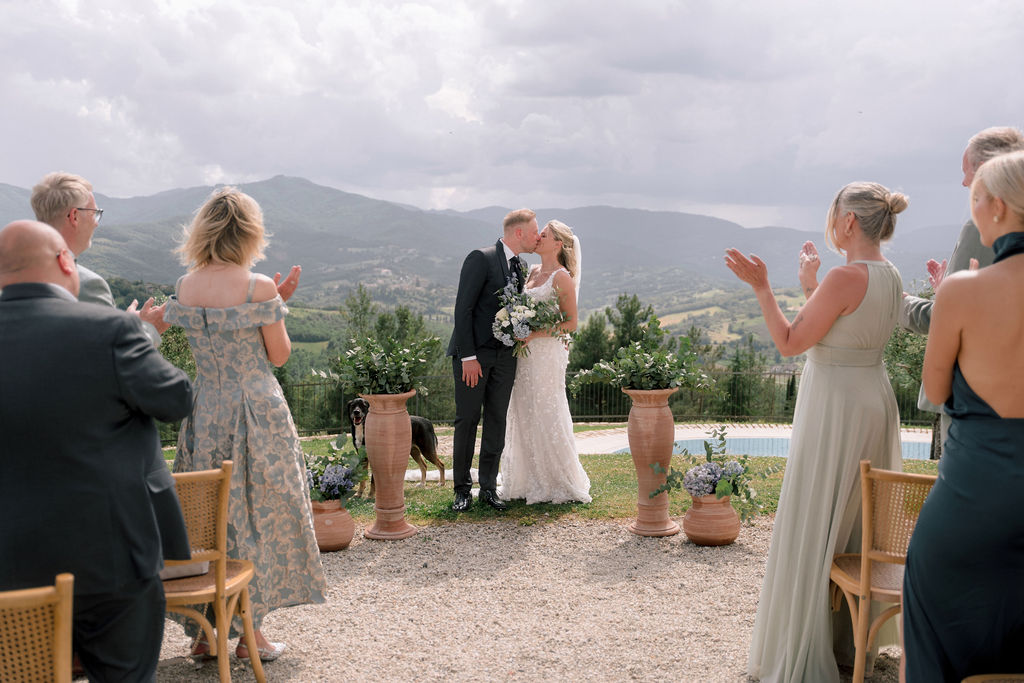
Countryside weddings in Italy often embrace a softer and more relaxed interpretation of sophistication — one deeply connected to nature, seasonality, and outdoor living.
Historic farm estates, vineyards, olive groves, and garden receptions invite an elegance that feels breathable, effortless, and atmospheric, particularly during long summer celebrations that unfold slowly from aperitivo to candlelit dinners beneath the stars.
Linen, lightweight wool, cotton blends, and soft silk textures often feel particularly suited to these settings, alongside earthy and sun-washed palettes inspired by the surrounding landscape: olive green, terracotta, dusty blue, champagne, and warm neutral tones.
Rather than appearing formal, countryside weddings in Italy often feel intimate, relaxed, and deeply connected to the beauty of the landscape itself.

@D2 Photography
What to Wear to a Seaside Wedding in Italy
Seaside celebrations introduce a different rhythm of elegance — one shaped by sunlight, sea air, movement, and a naturally relaxed sense of sophistication.
Whether celebrated on panoramic terraces, coastal gardens, or historic properties overlooking the Mediterranean, these weddings often inspire a style that feels lighter, fluid, and effortlessly refined.
Flowing dresses, breathable tailoring, natural fabrics, and luminous textures work beautifully in these environments, where comfort and movement become essential parts of the guest experience. Sunset cocktails overlooking the coast, sea breezes during dinner, and long evenings outdoors naturally invite softer silhouettes and lighter constructions.
Even highly formal seaside weddings rarely feel heavy. Instead, they embrace a type of sophistication that balances glamour with natural ease.

Common Mistakes International Guests Make
Attending a destination wedding in Italy is often very different from attending a wedding at home — not only because of the setting, but also because of the pace of the celebration, the climate, and the overall style of the event.
Most common “mistakes” are not really about fashion itself, but simply about underestimating the practical side of Italian weddings.
Many celebrations take place outdoors and continue across long summer afternoons and evenings, moving naturally from ceremony to aperitivo, dinner, and dancing late into the night. Guests sometimes arrive wearing fabrics or outfits that feel too heavy, structured, or impractical for the season and setting, particularly during countryside or seaside weddings.
For this reason, breathable fabrics, softer tailoring, and comfortable elegance often work beautifully in Italy. Linen, lightweight wool, silk, and natural textures tend to feel especially appropriate during warmer months.
At the same time, guests are sometimes surprised to discover that Italian evenings can become unexpectedly cool — particularly during late spring or September weddings, especially in the countryside. Even after very warm days, outdoor dinners and evening receptions may require a light shawl, jacket, or elegant cover-up to remain comfortable throughout the celebration.
Footwear is another detail worth considering carefully. Historic villas, vineyards, gardens, gravel paths, and stone courtyards can make very delicate heels or uncomfortable shoes difficult to manage over the course of a long event.
Ultimately, dressing for an Italian wedding is less about following rigid rules and more about finding the right balance between elegance, comfort, and the setting itself.

How Couples Can Create a Thoughtful Italian Wedding Dress Code
Creating a wedding dress code is not simply about deciding how formal the celebration should feel. In many ways, it is about helping guests understand the atmosphere of the wedding and allowing them to feel comfortable, confident, and naturally connected to the experience the couple wishes to create.
The most thoughtful dress codes rarely feel restrictive or overly prescriptive. Instead, they offer guests a sense of direction — helping them understand the tone of the celebration, the type of venue, the season, and even the rhythm of the event itself.
A countryside wedding beneath olive trees may require very different styling choices from a formal evening reception inside a castle, just as a seaside celebration may invite lighter fabrics and softer silhouettes than an autumn wedding in a medieval borgo. Considering the setting, timing, climate, and overall atmosphere allows couples to create dress codes that feel coherent, practical, and elegant at the same time.
Rather than focusing only on levels of formality, many couples today choose to communicate a mood or aesthetic feeling through their dress code wording. Expressions such as “Tuscan summer formal,” “Mediterranean black tie,” or “garden elegance” often help guests interpret the style more naturally than traditional labels alone.
A thoughtful dress code ultimately becomes part of the guest experience itself. When guests feel appropriately dressed for the setting, they are able to move through the celebration more comfortably and confidently, contributing to the sense of harmony that makes Italian weddings feel so immersive and memorable.
Why Communicating the Dress Code Matters
Many international guests may not immediately know what to expect from an Italian wedding — particularly when celebrations take place outdoors, continue late into the evening, or unfold across multiple locations and moments throughout the wedding weekend.
For this reason, communicating the dress code clearly and thoughtfully can be extremely helpful. It allows guests to prepare appropriately for the setting, the climate, and the overall tone of the celebration, while also reducing uncertainty and helping everyone feel more at ease.
This becomes even more important during multi-day destination weddings, where different events often carry very different atmospheres. A relaxed welcome dinner in the countryside, a formal wedding reception inside a historic villa, a poolside gathering, or a post-wedding brunch may each invite a completely different style of dressing. Helping guests understand the tone of each event allows them to prepare more comfortably and fully enjoy the experience.
This does not mean creating rigid rules. In fact, the most elegant dress code guidance often feels welcoming rather than restrictive, offering inspiration and practical context rather than strict instructions.
Simple details — such as mentioning that the reception will take place in gardens, on gravel paths, or outdoors throughout the evening — can already help guests make more informed and comfortable choices.
@Monica Caneva
Using Invitations and Wedding Communication to Guide Guests
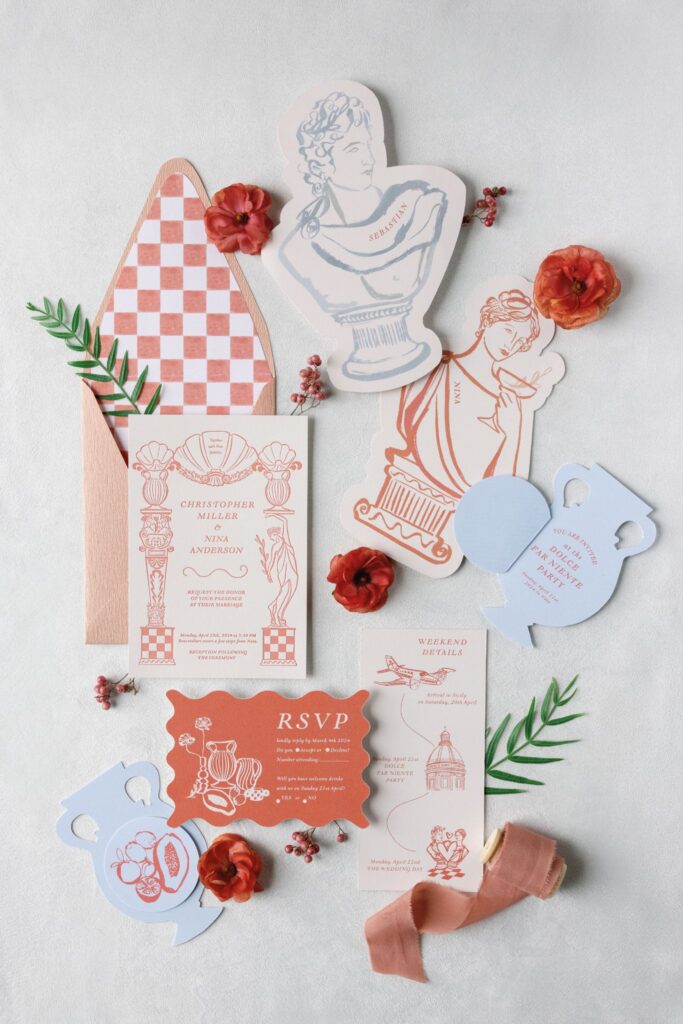
Wedding invitations and communication materials are often the first elements through which guests begin to understand the atmosphere of the celebration.
Long before reading the dress code itself, guests instinctively absorb visual cues through the invitation suite, color palette, typography, imagery, and overall aesthetic language of the wedding. A formal villa celebration may naturally communicate timeless sophistication, while a countryside wedding might immediately evoke a softer and more relaxed sense of elegance.
For destination weddings especially, wedding websites, welcome materials, and pre-event communication can become valuable tools for helping guests navigate practical details with ease. Sharing information about the setting, expected weather, outdoor spaces, or the tone of the celebration helps guests feel more prepared while maintaining a sense of excitement and anticipation.
For weddings that unfold across several days, many couples also choose to include guidance for individual events — from welcome dinners and rehearsal gatherings to excursions, poolside moments, or farewell brunches. Even a simple indication of the expected atmosphere can help guests pack more thoughtfully and feel fully prepared for the entire experience.
When communicated thoughtfully, the dress code becomes more than a practical note. It becomes part of the storytelling of the wedding itself — helping guests feel connected to the atmosphere long before the celebration even begins.

@Morina Foto
Why Dress Codes Shape the Feeling of Your Italian Wedding
A wedding dress code is never only about aesthetics or formality. It becomes part of the atmosphere itself — shaping the way the celebration is experienced, perceived, and remembered.
When guests feel aligned with the setting, the tone of the event, and the rhythm of the celebration, everything begins to feel more harmonious. The architecture, the lighting, the floral design, the music, the tablescapes, and the people themselves all contribute to the same emotional language.
This is one of the reasons destination weddings in Italy often feel so immersive. Elegance is rarely created by a single detail, but by the balance between all the elements that surround the experience.
A candlelit dinner inside a historic villa naturally evokes a different feeling from a long countryside celebration beneath olive trees or a relaxed seaside gathering overlooking the Mediterranean. And the way guests dress becomes part of that visual and emotional storytelling.
This does not mean guests should all look identical, nor that elegance requires rigid rules or uniformity. In fact, the beauty of many Italian weddings lies precisely in their sense of naturalness and individuality. What matters is that the overall atmosphere feels connected rather than visually disconnected from the setting itself.
When couples think carefully about the relationship between venue, concept, guest experience, and dress code, the result is often a celebration that feels not only beautiful, but emotionally immersive and deeply memorable.

Conclusion
The Beauty of Feeling Part of the Celebration
Long after an Italian wedding ends, guests rarely remember only what they wore or how beautiful the venue looked. More often, they remember how the celebration felt.
They remember candlelight reflecting on frescoed walls, dinners stretching late into the evening, music echoing through gardens and courtyards, and the magic of sharing meaningful moments in extraordinary places.
This is why the emotional experience of a wedding matters so deeply. It transforms a celebration from something guests simply attend into something they truly experience.
A thoughtful dress code becomes part of that transformation. It helps guests step naturally into the world the couple has imagined — whether that world feels timeless and formal, relaxed and sun-soaked, intimate and romantic, or softly cinematic.
In the end, the most memorable weddings are not necessarily the most elaborate. They are the ones where guests feel comfortable, present, and genuinely connected to the atmosphere surrounding them.
GET IN TOUCH