Introduction
There is a side of Italy where medieval villages rise above olive groves, centuries-old castles overlook the countryside, and food, craftsmanship and hospitality remain closely connected to everyday life. This is Umbria, a region in the heart of Italy with a character entirely its own.
For international couples dreaming of a destination wedding in Italy, Umbria offers an extraordinary variety of settings, from historic residences and private villas to intimate countryside retreats and entire medieval hamlets.
But choosing Umbria means discovering much more than a beautiful place to celebrate. It means embracing a territory whose architecture, landscapes, seasonal ingredients and artisanal traditions can become part of your wedding experience.
As wedding planners working between Tuscany and Umbria, we believe that a destination should never simply provide the backdrop for a celebration. It should inspire a wedding that reflects both the personality of the couple and the identity of the place they have chosen.
In this guide, we explore everything you need to know about getting married in Umbria, from choosing the right area and wedding venue to understanding the seasons, planning your budget and creating an unforgettable experience for your guests.
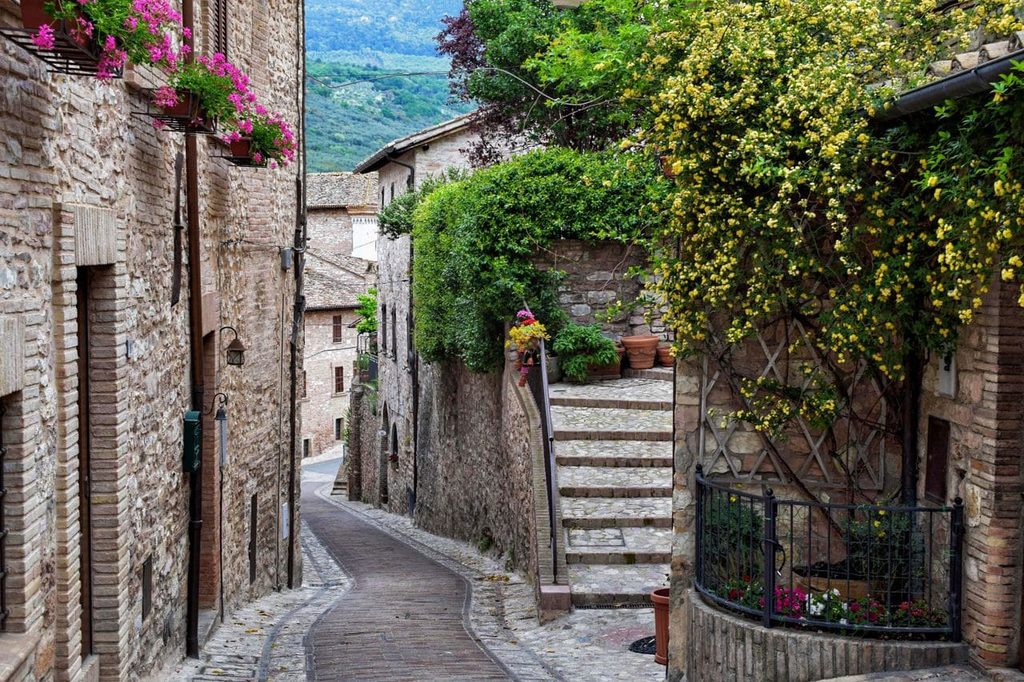
Spello streets
1. Why Choose Umbria for Your Destination Wedding?
Often called the Green Heart of Italy, Umbria is a region where landscapes, historic towns and local traditions remain closely connected. Its countryside is dotted with medieval castles, olive groves, vineyards and villages that have preserved much of their original character.
For couples considering a destination wedding in Umbria, however, the appeal goes beyond the beauty of the landscape. What makes this region distinctive is the opportunity to experience a side of Italy where history, craftsmanship, gastronomy and everyday life are still deeply intertwined.
A Landscape Shaped by History
Umbria’s architectural heritage offers an extraordinary variety of settings for a wedding. Medieval castles, historic villas, fortified villages and traditional country houses reflect different periods of the region’s past, each with its own character and relationship with the surrounding landscape.
Many of these properties have been restored to accommodate private celebrations, allowing couples to choose between very different atmospheres without losing the connection to the territory. The setting itself can become a source of inspiration, influencing the design, the use of spaces and the overall experience of the wedding.
An Italian Experience Rooted in Local Culture
One of Umbria’s greatest strengths is its connection to local traditions. Food, wine, agriculture and craftsmanship continue to play an important role in the region’s cultural identity, offering couples and their guests opportunities to discover Italy beyond its most familiar images.
This heritage can become part of the celebration in many ways, from regional ingredients on the wedding menu to encounters with local artisans or experiences organised around the wedding weekend.
Choosing Umbria means embracing a destination with an identity of its own, where the wedding can reflect both the couple’s personality and the character of the place they have chosen.
2. Where to Get Married in Umbria: Exploring the Region
Although Umbria is a relatively compact region, its different areas offer distinct landscapes, architectural settings and opportunities for a destination wedding.
Choosing where to get married should therefore be one of the first decisions in the planning process.
The location will influence not only the atmosphere of the celebration, but also travel arrangements, accommodation options and the experiences available to your guests.
Northern Umbria: Città di Castello and the Upper Tiber Valley
Northern Umbria reveals a greener, more rugged side of the region. The Upper Tiber Valley, known locally as the Alta Valle del Tevere, stretches along the northern course of the Tiber River, not far from its source on Monte Fumaiolo. Here, wooded hills, mountain ridges and cultivated valleys create a landscape with a more secluded, almost untamed character than the gentler countryside of central Umbria. Forests cover much of the surrounding slopes, while the river winds through a valley where agriculture has shaped the landscape for centuries.

Around Città di Castello, Umbertide and the surrounding countryside, medieval castles, fortified villages and historic residences reflect the area’s rich history. Città di Castello adds an important artistic dimension, with its Renaissance heritage and connection to contemporary art through Alberto Burri, while agricultural traditions and local craftsmanship remain closely tied to the territory.
Here, couples can choose between countryside estates, historic properties and intimate village settings, while the proximity to Tuscany makes it possible to explore both regions during a longer stay.
One particularly distinctive possibility is getting married within a historic Italian borgo, where the village itself becomes part of the celebration. Through our collaborations with Citerna, Montone and Monte Santa Maria Tiberina, couples can discover a different way of celebrating, bringing together historic architecture, village life and local traditions in a setting that feels deeply connected to the territory.
Discover the Umbrian hamlets where we celebrate weddings or explore our guide to getting married in an Italian hamlet for a closer look at this distinctive way of celebrating in Italy.
Perugia and Lake Trasimeno
The area around Perugia offers a different side of Umbria, bringing together art, architecture and contemporary cultural life with the countryside that surrounds the city.
As the regional capital, Perugia is much more than a historic backdrop. Its Etruscan and medieval heritage, museums, galleries, exhibitions and cultural events make it an interesting destination in its own right, particularly for couples who want their guests to experience an Italian city as part of their stay. Beyond the historic centre, the surrounding hills are home to villas, historic residences and countryside properties that allow couples to remain close to the city while celebrating in a more private setting.
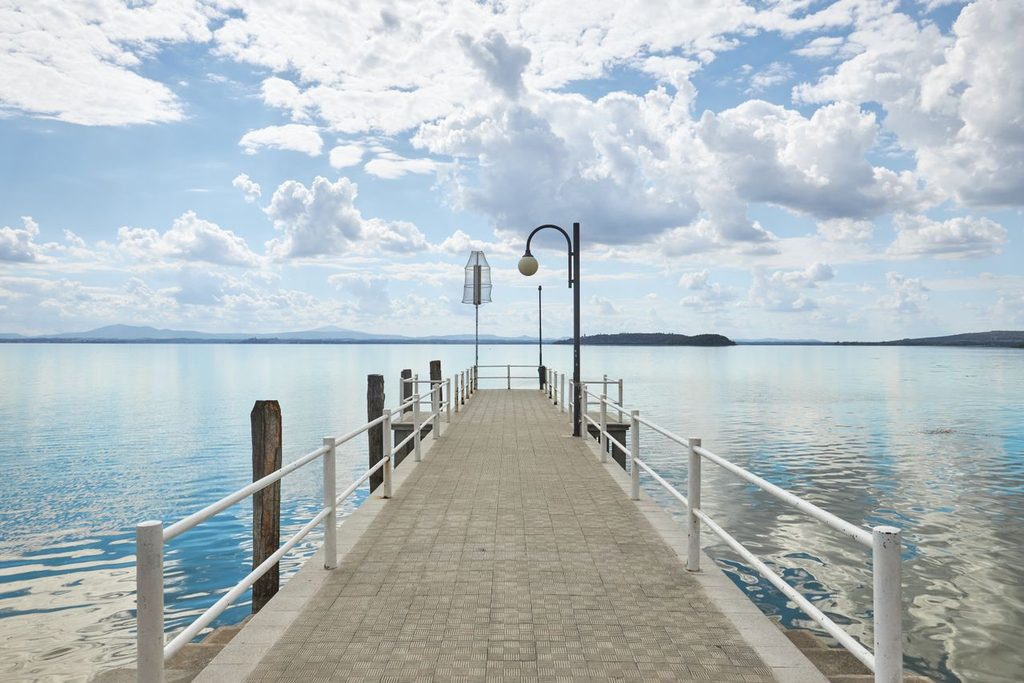
Further west, Lake Trasimeno adds something quite different to the Umbrian landscape: water. For couples who are naturally drawn to lakeside settings, but still want the character of central Italy, this area can offer a particularly interesting balance. Views across the lake, small waterfront towns and the surrounding olive-covered hills create opportunities for ceremonies, dinners and wedding-weekend experiences where the water becomes part of the atmosphere.
The area also lends itself beautifully to the days around the wedding. Guests can spend time discovering Perugia’s cultural life, explore the villages around Lake Trasimeno, enjoy local food and wine, or simply experience two very different expressions of Umbria within a relatively compact area.
Assisi, Spello and the Central Umbrian Valley
The area around Assisi and Spello brings together some of the most recognisable elements of Umbria: spiritual heritage, beautifully preserved hilltop towns, ancient walking routes, craftsmanship and wine country.
Assisi naturally holds a special place within the region. Known throughout the world for its connection to Saint Francis, its spiritual heritage extends beyond its churches and religious sites. The architecture, landscape and centuries of pilgrimage have shaped the identity of the town and its surroundings, making it a particularly fascinating place for international guests to experience during their stay in Umbria.
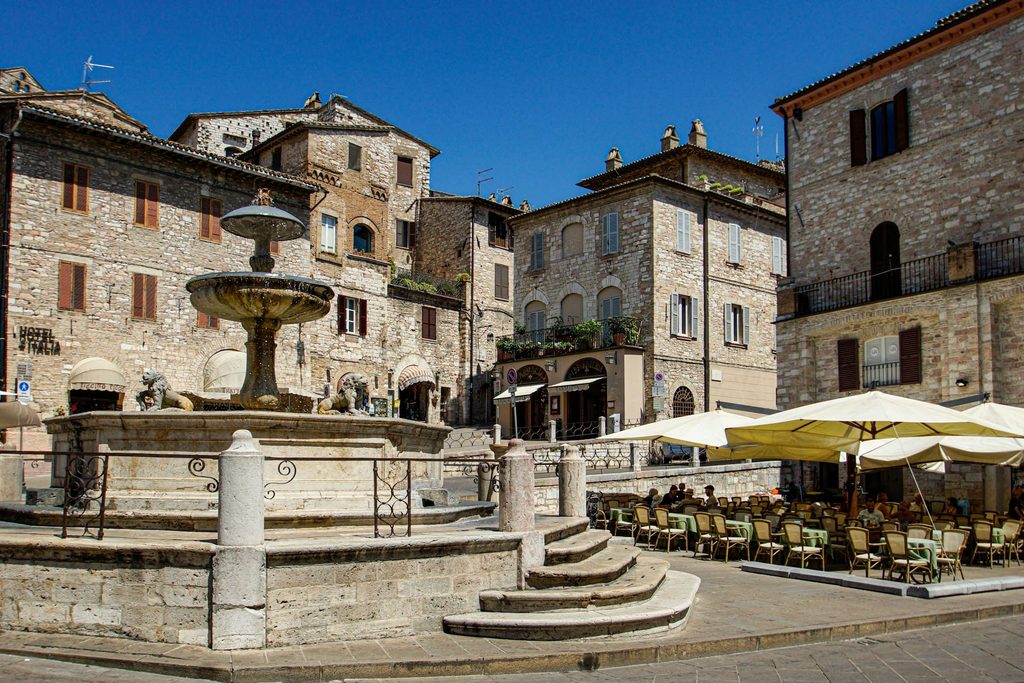
Assisi
Nearby Spello has a different, more intimate character. Its stone houses, narrow streets, Roman remains and flower-filled corners create the kind of postcard image many travellers associate with central Italy. Yet this is also a living town, where local traditions and craftsmanship remain part of everyday life.
The surrounding territory adds another dimension. Walking routes and historic pilgrimage paths cross this part of Umbria, connecting towns, countryside and places of spiritual significance. For couples who enjoy walking and slow travel, these routes can inspire experiences beyond the wedding day and offer guests a more personal way to discover the landscape.
This is also an area where wine and craftsmanship have deep roots. The hills towards Montefalco and Bevagna lead into one of Umbria’s best-known wine territories, while traditional ceramics remain an important part of the region’s artistic heritage. These local traditions can become part of a wedding weekend through winery visits, artisan workshops or carefully chosen details — without turning the celebration into a collection of Italian symbols.
Norcia, Valnerina and the Sibillini Mountains
Eastern Umbria reveals a wilder, more mountainous side of the region. The Valnerina and the Sibillini Mountains are characterised by wooded valleys, rugged peaks, historic villages and wide open plateaus, offering a striking alternative to the rolling hills of central Umbria.
At the heart of this territory, Norcia is known for its connection to Saint Benedict and its rich gastronomic traditions, from cured meats and black truffles to the celebrated lentils of nearby Castelluccio. The surrounding Monti Sibillini National Park, with its hiking trails and spectacular mountain scenery, adds opportunities for outdoor experiences.
For couples drawn to nature and a more secluded setting, this area offers a distinctive backdrop for an intimate wedding, although accessibility, accommodation and seasonal weather deserve particular attention when planning a celebration here.
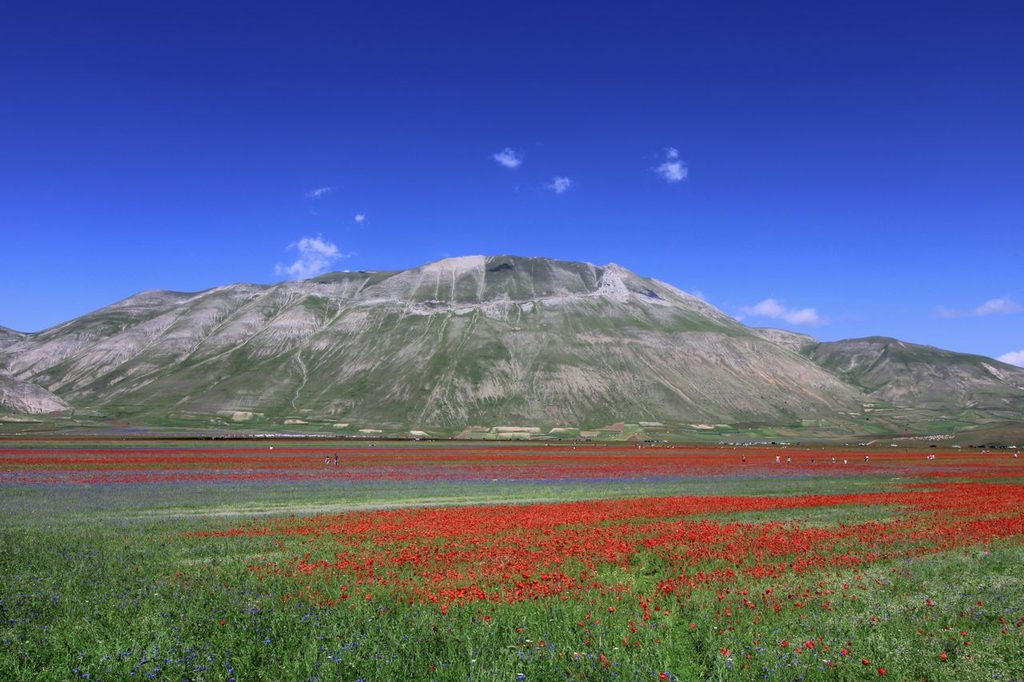
Piana di Castelluccio
Todi, Orvieto and Southern Umbria
Moving towards Southern Umbria, the landscape changes again. Todi and Orvieto combine remarkable historic centres with a countryside shaped by vineyards, olive groves and dramatic hilltop views, offering another interpretation of the region for a destination wedding.
Orvieto is perhaps the most striking example. With ancient Etruscan origins, the town rises dramatically on a plateau of volcanic tuff, a distinctive feature that has shaped its architecture and history over the centuries. Its magnificent Cathedral stands at the heart of a rich artistic and cultural heritage, while its historic streets, underground spaces, artisan workshops and long connection with wine make it a destination worth experiencing beyond the wedding itself. For international guests, spending time here can add an important cultural dimension to their stay in Umbria.
Todi offers a different atmosphere. Its medieval centre, piazzas and views over the surrounding countryside have a more intimate rhythm, while the hills around the town are dotted with historic residences, country houses and estates that lend themselves naturally to private celebrations.
The wider area also has a strong connection to wine, olive oil and traditional food production, creating opportunities to build the days around the wedding through experiences that belong naturally to the territory — from a winery visit to a long lunch overlooking the countryside.
Southern Umbria can also be particularly interesting from a logistical perspective. Its position towards Lazio makes Rome an important gateway for international guests, depending on the exact location of the wedding venue. This can be a valuable consideration for couples expecting guests to arrive from several different countries.
For couples considering this part of Umbria, the appeal lies in the balance: a wedding immersed in the countryside, with some of the region’s richest artistic and cultural heritage close at hand.
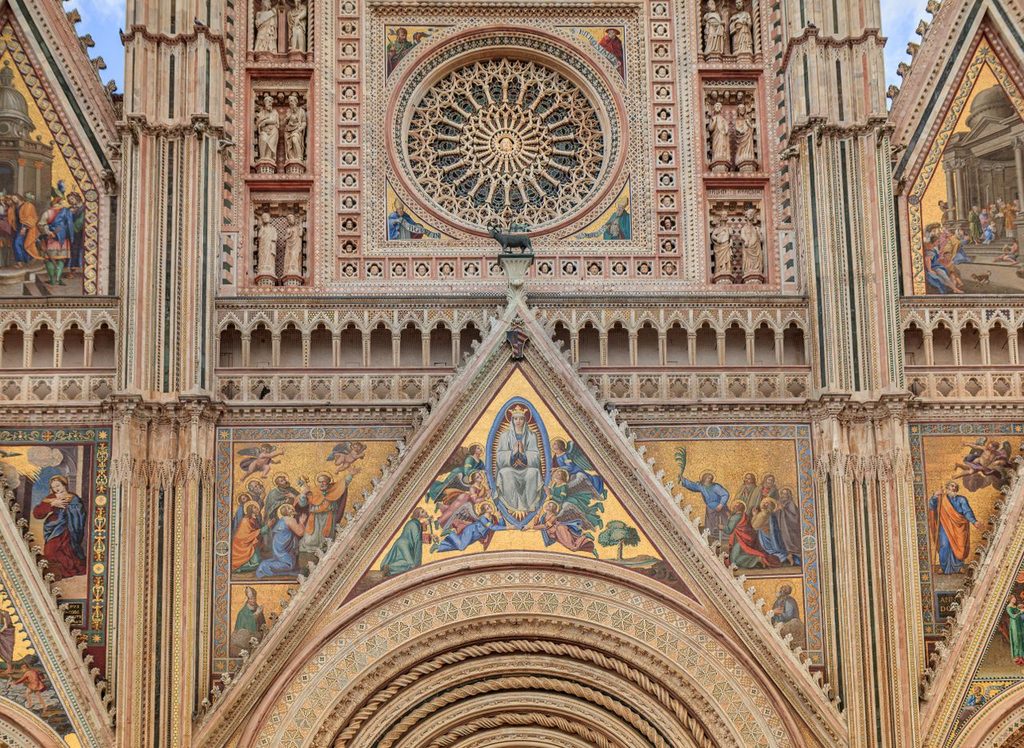
Orvieto’s Cathedral
Getting to Umbria: Choosing the Right Gateway
When choosing where to get married in Umbria, accessibility is worth considering from the very beginning. The region sits in the centre of Italy, but the most convenient arrival point can change considerably depending on where your wedding takes place.
Perugia San Francesco d’Assisi Airport is the region’s own airport and can be a convenient option when suitable connections are available. For international guests, however, Florence and Rome are often important gateways to consider as well: Florence can be particularly practical for Northern Umbria, while Rome is naturally well positioned for destinations further south.
The final part of the journey matters too. Many of Umbria’s most beautiful wedding venues, country houses and historic villages are located outside the main towns, where travelling by car or arranging private transportation may be the most practical solution.
This does not make Umbria difficult to reach, but it does make the location of your venue an important part of the logistical planning. When comparing different areas, consider not only the landscape and atmosphere you love, but also where your guests will be travelling from and how their journey will continue once they arrive in Italy.

3. Choosing Your Wedding Venue in Umbria
Choosing a venue is one of the decisions that will influence your destination wedding the most. In Umbria, it is also an opportunity to decide how closely you want your celebration to connect with the place itself.
The region offers castles, historic villas, restored country houses, agriturismi and entire hamlets, but these are not simply different architectural styles. Each creates a different way of experiencing the wedding — and of bringing your guests together.
Before focusing on aesthetics, think about the kind of celebration you want to create. Do you imagine everyone staying together for several days? A private countryside setting? A historic building with a strong architectural identity? Or a wedding that becomes part of the life of an Umbrian village?
These questions can help narrow down the search much more effectively than photographs alone.
Castles and Historic Residences: Let the Architecture Lead
Umbria’s history is visible in its architecture, and many wedding venues occupy buildings that have evolved over centuries: castles, fortified residences, noble houses and historic estates.
Celebrating in a place with such a strong identity requires a particular approach to design. Rather than treating the venue as an empty space to transform, prefer to start with what is already there — the stone, proportions, courtyards, gardens, frescoes or views — and develop the wedding around it.
This does not mean creating a “historic” wedding. A contemporary floral design, a very personal colour palette or elements drawn from the couple’s own culture can coexist beautifully with an ancient setting. The aim is to create a dialogue rather than cover the character of the place.
If you are particularly drawn to historic architecture, our guide to Italy’s antique wedding venues explores this type of setting in greater depth.

Castello di Reschio – Lisciano Niccone
Villas: Architecture, Gardens and Italian Heritage
Italian villas offer a remarkable variety of settings for a wedding, from elegant country residences to grand historic properties with impressive architecture, landscaped gardens and spacious terraces. In Umbria, many of these buildings reflect centuries of architectural and cultural history, each with its own distinctive character.
What makes a villa particularly interesting is the relationship between the residence and its surrounding spaces. Formal gardens, courtyards, terraces and historic interiors often form part of a carefully designed architectural setting, offering different possibilities for the ceremony, reception and wedding design.
Some villas lend themselves to elaborate celebrations, while others are better suited to smaller gatherings. In either case, the architecture provides a strong starting point for creating a wedding that feels coherent with the property, whether the chosen aesthetic is classical, contemporary or a combination of different influences.
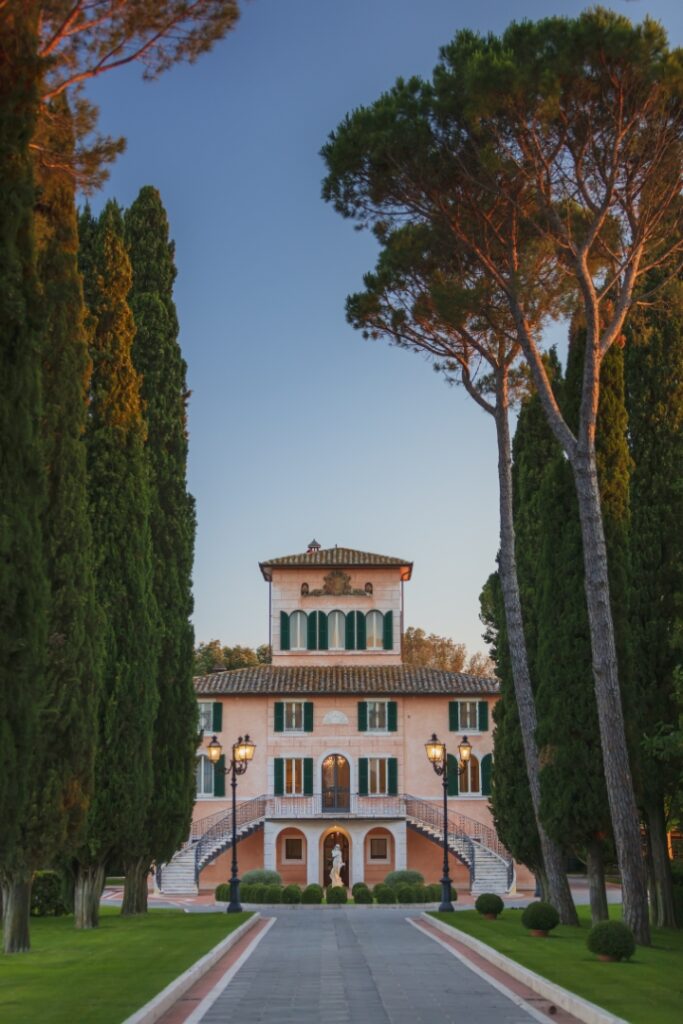
Villa Valentini Bonaparte – Castiglione del Lago
Borghi: When the Destination Becomes Part of the Wedding
A wedding in an Italian borgo creates a very different relationship with the destination.
Rather than celebrating entirely within a private estate, the streets, squares and historic architecture of a village can become part of the day. Guests are not simply looking at an Umbrian landscape from a terrace; they are moving through a place with its own history and community.
This can be especially interesting for couples looking for a strong connection with Italian culture and local life. As we explored earlier in this guide, several Umbrian villages also offer possibilities for ceremonies and celebrations within the historic centre itself.

Lippiano
Agriturismi and Country Estates: A Closer Connection to the Land
For couples drawn to the Umbrian countryside, agriturismi and country estates offer an experience closely connected to the region’s rural heritage. These properties are often surrounded by olive groves, vineyards, farmland or wooded hills, with architecture that reflects the agricultural history of the territory.
An agriturismo is a specifically Italian form of hospitality connected to an agricultural business, often offering accommodation and food experiences linked to local production. Country estates represent a broader category, ranging from restored farmhouses to extensive rural properties, some of which continue to produce wine, olive oil or other regional products.
For a destination wedding, these settings can bring the landscape, seasonal food and local agricultural traditions into the celebration. Depending on the property, guests may also have the opportunity to stay on site and experience the countryside over several days, discovering a side of Umbria that extends beyond the wedding itself.
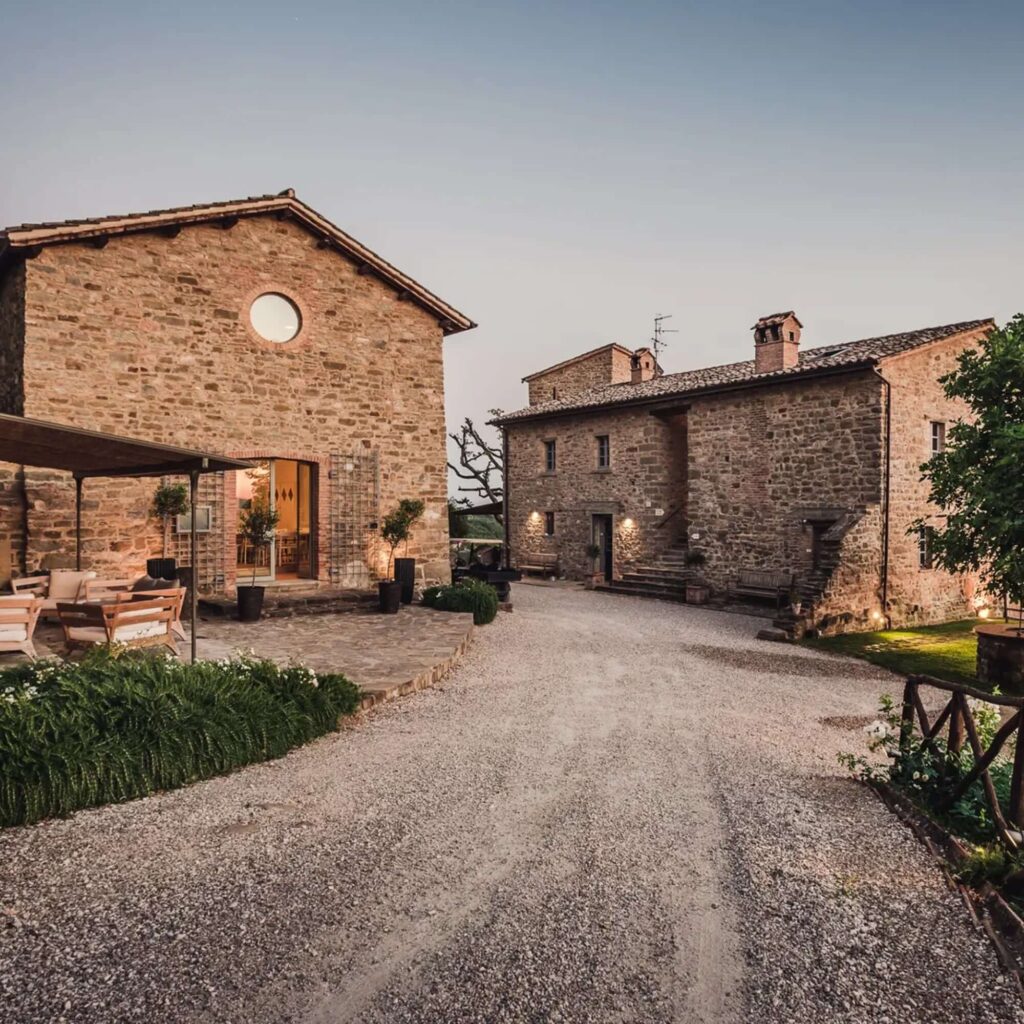
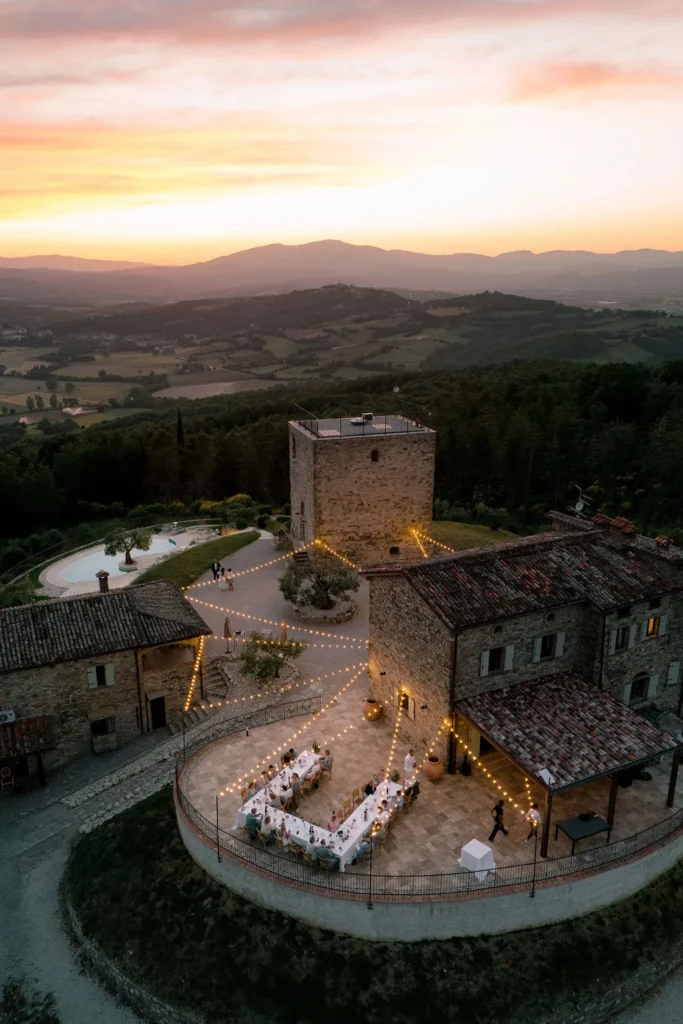
Nikis Resort – Umbertide
Staying Together: A Different Kind of Destination Wedding
For an international wedding, one of the most important distinctions between venues is whether guests can stay where the wedding takes place.
When a property has enough accommodation, the experience changes considerably. Breakfast the morning after, an afternoon by the pool, an informal welcome evening or simply meeting each other around the property can become part of the wedding weekend without needing to be carefully scheduled.
But accommodation capacity and event capacity are not the same thing. A venue may comfortably host a reception for 100 guests while sleeping only a fraction of them.
If keeping everyone together is important to you, this should be one of the first questions you ask — not something to resolve after booking the venue.
Look Beyond the Photographs
Venue scouting for a destination wedding involves many practical details that are easy to overlook when choosing from abroad.
A strong Plan B for bad weather is essential. So are the rules around music, catering and external suppliers; accessibility for guests; parking and transfers; accommodation arrangements; and the practical requirements for setting up and dismantling the event.
Even the distance between the ceremony, dinner and dancing areas can affect the rhythm of the day.
This is why we always look at a venue not only through the eyes of the couple, but also from the perspective of their guests and the professionals who will need to work there.
The goal is not simply to find the most impressive property. It is to find the place whose architecture, logistics and atmosphere support the wedding you actually want to create.
For some concrete inspiration, you can also explore our selection of destination wedding venues in Tuscany and Umbria. Rather than looking for a single “best” venue, consider how differently each setting could shape the experience of your wedding.
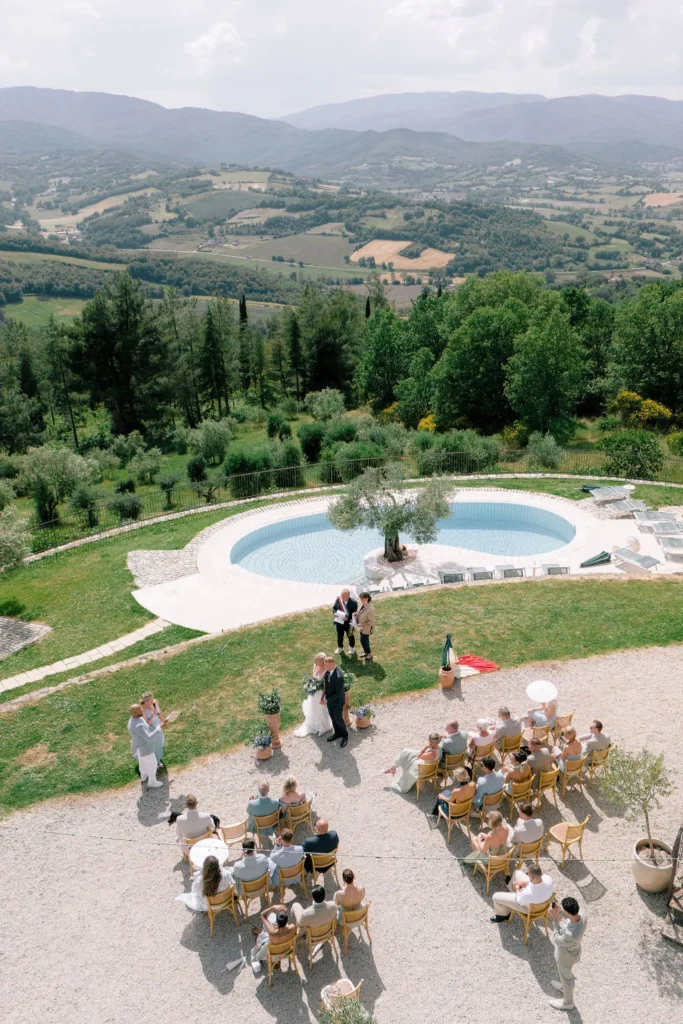
4. When Is the Best Time to Get Married in Umbria?
There is no single best month for a wedding in Umbria. The right season depends on the atmosphere you imagine, the spaces you want to use and the experience you want your guests to have.
What is important to understand is that seasonality affects much more than the landscape. It influences the timing of the ceremony, the hours of daylight, the way outdoor spaces can be used, the flowers naturally available, the ingredients on the menu and, ultimately, the rhythm of the entire wedding day.
For us, planning with the season — rather than trying to work around it — is one of the simplest ways to create a wedding that feels naturally connected to Umbria.
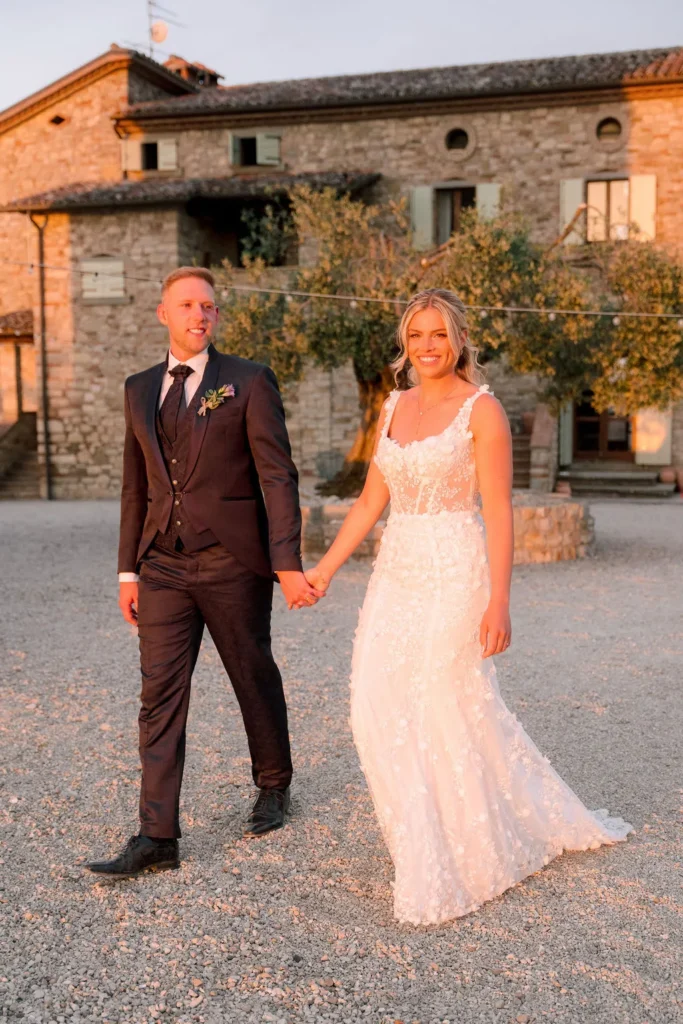
Spring: Green Landscapes and a Changing Season
From April into early June, the Umbrian countryside is at its greenest. Gardens come back to life, the landscape feels fresh and seasonal flowers offer plenty of possibilities for floral design.
Spring can be wonderful for outdoor ceremonies and aperitivo, but it is also a season of changing weather. Warm afternoons can turn into cooler evenings, and rain always needs to be considered.
This makes the venue particularly important. A good Plan B should feel like an alternative setting for the wedding, not an emergency solution.
Spring also offers an interesting opportunity to work with what is naturally available at that moment, both in the floral design and on the table. Rather than arriving with a fixed idea of what an Italian spring wedding should look like, we prefer to see what the season and the territory can offer.
Summer: Long Days, Outdoor Living and Careful Timing
Summer is naturally associated with outdoor weddings in Italy, and for good reason. Long hours of daylight make it possible to enjoy gardens, terraces and courtyards well into the evening, while dinner outdoors can become one of the most memorable parts of a destination wedding.
But summer planning in Umbria is also about managing heat intelligently.
In July and August especially, an early afternoon ceremony may be uncomfortable for guests. Shade, access to water and the orientation of the ceremony space all matter. A later ceremony can make a significant difference, allowing the celebration to begin as temperatures become more comfortable and continue into the evening.
This is a good example of why the wedding timeline should respond to the destination rather than follow a standard formula.
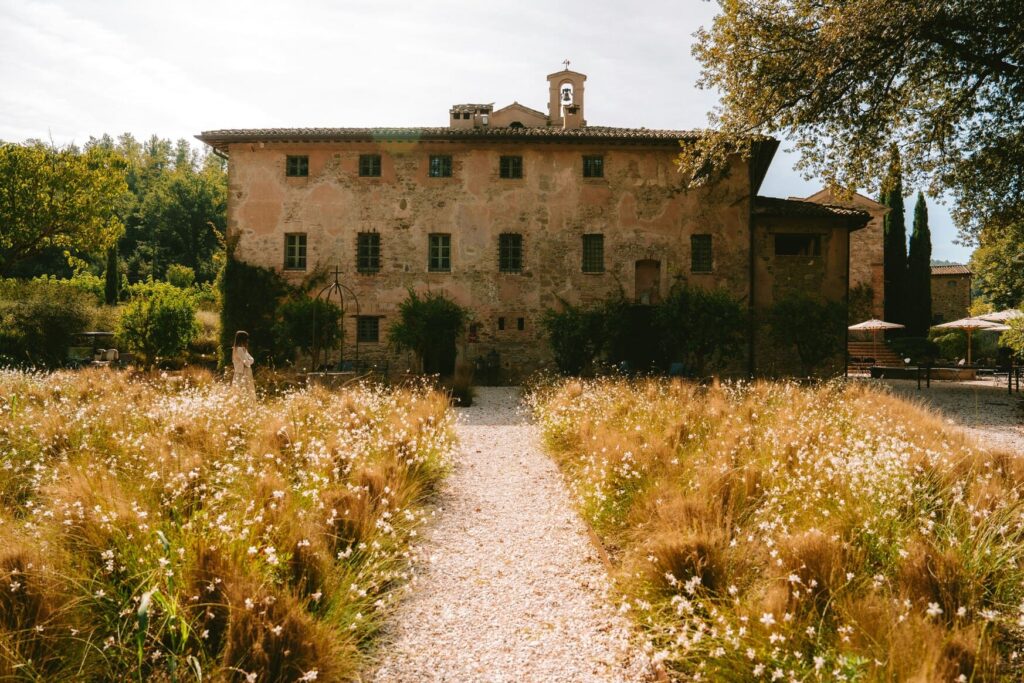
Vocabolo Moscatelli – Calzolaro
September and October: Harvest Season and a Different Side of Umbria
September is one of the most appealing periods for weddings in Umbria. The days can still feel distinctly summery, while the landscape gradually begins its transition towards autumn.
As the season progresses, grape harvests, olive groves and autumn produce bring the agricultural identity of the region more visibly into the experience. This can inspire everything from the menu and wine selection to the colours and materials used in the design.
October offers something different again. Shorter days and more variable weather require thoughtful planning, but the changing landscape, seasonal food and possibility of using both historic interiors and outdoor spaces can give the celebration a particularly strong sense of place.
An autumn wedding does not need to reproduce a predetermined palette of oranges and browns. The season can be interpreted much more subtly through ingredients, flowers, textures, light and the natural surroundings.
Winter: Intimate Celebrations and Historic Interiors
Winter is not the obvious choice for a destination wedding in Umbria — and that can be part of its appeal.
This is the season when the focus moves from gardens and terraces to historic interiors, shared meals and a more intimate experience of the region. Castles, villas and country houses with beautiful indoor spaces can take on an entirely different character.
Venue selection becomes especially important. Heating, indoor capacity, accommodation and accessibility in winter conditions all need to be considered carefully.
For a smaller celebration, however, winter can offer a very personal way of experiencing Umbria, particularly for couples whose idea of Italy is less about an outdoor summer wedding and more about food, culture and time spent together.
If you are considering the colder months, our guide to winter weddings in Italy explores the season in greater depth, from venue selection and weather considerations to the atmosphere and experiences that can make a winter celebration particularly distinctive.

Let the Season Become Part of the Design
Whatever month you choose, we believe seasonality should be treated as a creative resource rather than a limitation.
Flowers that naturally belong to that moment of the year, ingredients sourced from the surrounding area and a timeline designed around temperature and daylight can all make the wedding feel more coherent with its setting.
This does not mean that every detail has to be local or seasonal. The point is to let the territory become the starting point, rather than imposing a wedding concept that could take place anywhere.
In the end, the best time to get married in Umbria is not simply the month with the highest chance of sunshine. It is the season that best supports the way you want your wedding to feel.
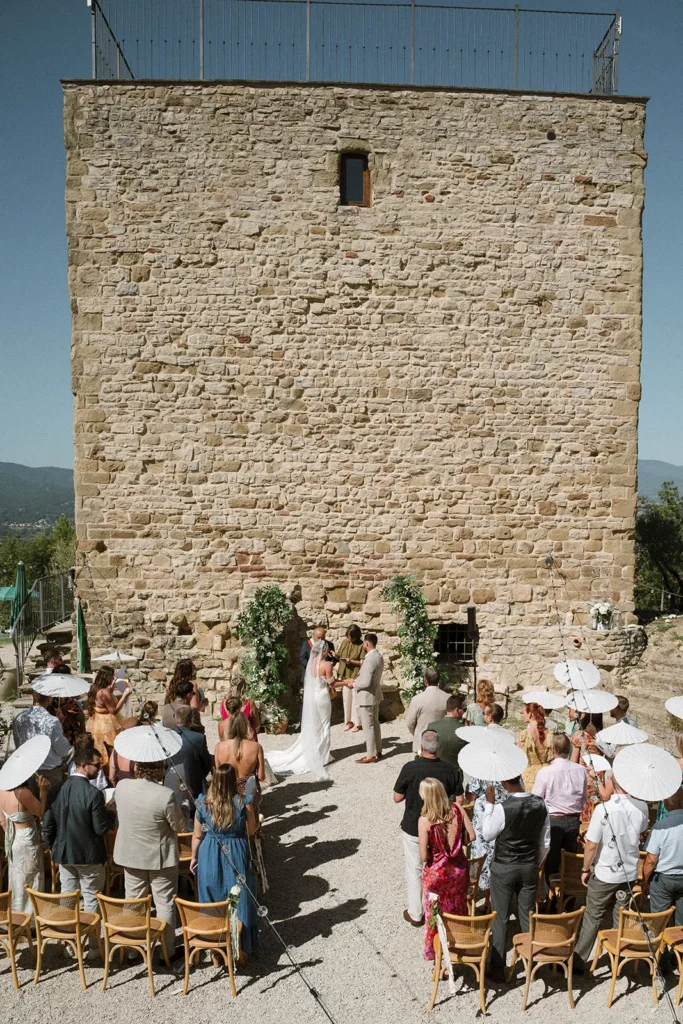
Torre di Celle – Monte Santa Maria Tiberina
5. Planning Your Wedding Budget in Umbria
One of the first questions couples ask when considering a destination wedding is naturally: how much does it cost to get married in Umbria? There is no single figure that can answer this question in a useful way, as two weddings with the same number of guests can have very different budgets depending on the venue, season, accommodation, logistics, design and number of events involved.
It is also important not to approach Umbria simply as a more affordable alternative to Tuscany. The region has its own identity and a wide variety of properties, from intimate countryside retreats to exclusive historic residences. Rather than starting from a comparison between destinations, we believe it is more useful to understand what kind of wedding experience you want to create and what will be required to make it possible.
Start with the Entire Wedding Experience
For a destination wedding, budgeting rarely begins and ends with the wedding day. A welcome dinner, guest transportation, accommodation, a farewell brunch or an experience organised during the stay may all become part of the project. None of these elements is essential, but if they are important to the way you imagine the celebration, they should be considered from the beginning rather than added gradually once the main budget has already been allocated.
This is particularly relevant in Umbria, where many couples choose countryside venues and decide to spend several days with their guests. A wedding weekend in which everyone stays together and shares several moments naturally has a different cost structure from a celebration centred on a single day. Looking at the experience as a whole makes it easier to understand where the budget will have the greatest impact.
Understand What Your Venue Really Includes
Venue quotations can be difficult to compare, especially when properties operate according to very different models. One venue may charge for exclusive use while including accommodation and some furniture; another may initially appear less expensive but require additional rentals, technical equipment or external services.
The same applies to catering, cleaning, security, additional event spaces, late-night celebrations and the time required for set-up and dismantling. For this reason, the initial venue fee should always be considered within the wider picture of what the property includes and what the wedding will require.
This is also where the characteristics of the venue itself begin to influence the rest of the budget. A property with suitable furniture, well-equipped event spaces and a strong indoor alternative in case of rain may require fewer additional elements than a venue where much of the infrastructure has to be brought in specifically for the wedding.
Consider Logistics from the Beginning
Some of the less obvious destination wedding costs are connected to logistics rather than design. A countryside venue may require transportation for guests staying elsewhere, while a historic property may need additional lighting, power or equipment to make certain spaces suitable for an event. Supplier travel, access restrictions and the practical requirements of setting up in a remote location can also influence quotations.
These factors should not discourage couples from choosing a historic or rural venue — they are part of what can make a wedding in Umbria so distinctive. However, understanding them early makes it possible to make informed decisions before too much of the budget has been committed elsewhere.
Build the Budget Around Your Priorities
A tailor-made wedding does not mean investing equally in every aspect of the celebration. For one couple, food and wine may be central to the experience; for another, live music, photography or floral design may matter more. Some couples may prefer to dedicate a greater part of the budget to accommodation so that everyone can stay together, while others may choose to invest in a particular experience during the wedding weekend.
Defining these priorities early allows the budget to reflect the couple rather than a standard checklist of what a destination wedding is expected to include. It can also create room for details with a more personal connection to the place. A few pieces made by local artisans, for example, may contribute more to the identity of the wedding than a larger quantity of decorative elements chosen without a particular connection to the project.

Nikis Resort – Umbertide
Look at Value Across the Entire Project
Comparing individual quotations is important, but price alone does not always reveal the value of a particular choice. A supplier who already knows the venue, accommodation that reduces the need for daily transfers, or a property with an excellent weather alternative may simplify other parts of the project and influence costs elsewhere.
Wedding budgeting is therefore best understood as a series of connected decisions. Choices about the venue affect logistics; accommodation affects transportation; the season can influence flowers, food and the use of spaces. Looking at these relationships helps couples understand not only what each element costs, but also what role it plays within the wedding as a whole.
Ultimately, there is no standard budget for getting married in Umbria. The aim is to build a realistic one around the celebration you actually want, leaving space for the people, experiences and details that matter most to you. In this sense, budgeting becomes part of the tailor-made planning process itself: not a formula to follow, but a way of deciding where your priorities truly lie.
6. Guest Accommodation and Transportation in Umbria
For international couples, organising a destination wedding in Umbria also means considering how guests will travel, where they will stay and how easily they can move between the different moments of the celebration. While the region is accessible through several airports and transport connections, many wedding venues are located in the countryside, where private transportation or rental cars may be the most practical solution.
Accommodation is another important consideration, particularly for couples planning a multi-day wedding. Staying together at the venue can make the experience more relaxed and convivial, allowing guests to share informal moments beyond the wedding itself. When the property cannot accommodate everyone, choosing nearby hotels or country houses within a limited area can simplify transfers and make the weekend more comfortable.

Guest transportation deserves particular attention, especially for evening celebrations. Narrow country roads, historic village centres and the distance between accommodation and the venue may influence the type of vehicles required and the organisation of shuttle services. Considering these details early helps avoid unnecessary complications later.
A well-prepared wedding website or guest guide can also make a considerable difference, bringing together practical travel information, accommodation details and suggestions for exploring the surrounding area. For us, this is an important part of Italian hospitality: ensuring that guests feel welcomed and informed, while giving them the freedom to enjoy Umbria in their own way.
7. Beyond the Wedding Day: Creating an Authentic Umbrian Experience
Choosing Umbria for a destination wedding can mean much more than finding a beautiful venue in the Italian countryside. For couples and guests travelling from abroad, the days surrounding the celebration are also an opportunity to understand something of the place they have come to — its food, landscape, traditions and, perhaps most importantly, its rhythm.
Umbria lends itself particularly well to this kind of experience. Life here is still closely connected to the countryside and to the seasons, and many of the things that define the region are relatively simple: walking through a historic town, sharing a long meal, tasting something produced a few kilometres away or meeting the person who made an object by hand.
For a wedding weekend, these experiences do not need to become a packed itinerary. In fact, leaving time to experience the destination at a slower pace can be one of the most Italian choices of all.
Discovering Umbria Through Food
Food is naturally one of the easiest ways to introduce guests to the region, but an Umbrian experience can go much further than serving a generically “Italian” menu.
The territory has a strong connection with olive oil, wine and seasonal produce, while truffles are an important part of Umbrian food culture. Depending on the time of year and the area, a truffle-based dish, a tasting or even an experience connected with truffle hunting can become a way of discovering both the landscape and the traditions behind what arrives at the table.
The same approach can influence a welcome dinner or the wedding menu itself. Rather than trying to include as many Italian specialities as possible, we prefer the idea of allowing a few ingredients, recipes or wines to tell something about the particular part of Umbria where the wedding is taking place.
In this way, food becomes part of the sense of place rather than another theme to add to the celebration.
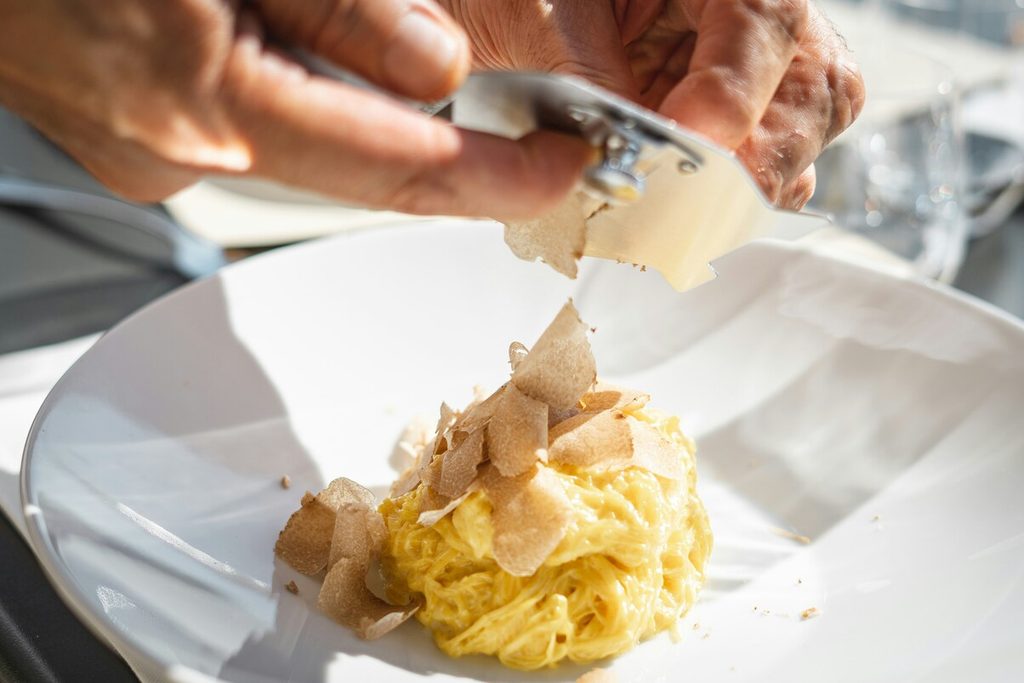
Walking, Exploring and Spending Time Together
Not every wedding-weekend experience needs to be formally organised. One of the pleasures of Umbria is that walking can become an experience in itself, whether through the streets of a medieval borgo, along a countryside path or on one of the historic routes that cross the region.
For a group of guests who may not see each other often, a walk together can also offer something very different from a scheduled excursion. There is time to talk, stop for a coffee, discover a view or simply experience the landscape without a programme to follow.
For couples who enjoy hiking or slow travel, longer walks and sections of local paths can become a more personal part of the wedding weekend. For others, it might be nothing more complicated than exploring the village closest to the venue before meeting again for dinner.
The important point is that experiencing Umbria does not necessarily require constant entertainment. Sometimes the destination needs enough space to reveal itself.
Craftsmanship as a Connection to the Territory
The same philosophy applies to Umbrian craftsmanship. Ceramics, textiles and other artisanal traditions are not simply sources of decorative inspiration; they represent knowledge that has been passed down and continues to evolve through the people who practise it today.
Couples may choose to encounter this side of the region through an artisan workshop, or incorporate it more subtly into the wedding itself. A handmade ceramic piece, locally produced textile or stationery created with traditional techniques can become part of the celebration when it has a genuine connection with the overall design.
For us, this is where tailor-made and local craftsmanship naturally meet. The objective is not to fill a wedding with recognisably Italian objects, but to find details that make sense for this particular couple, in this particular place.
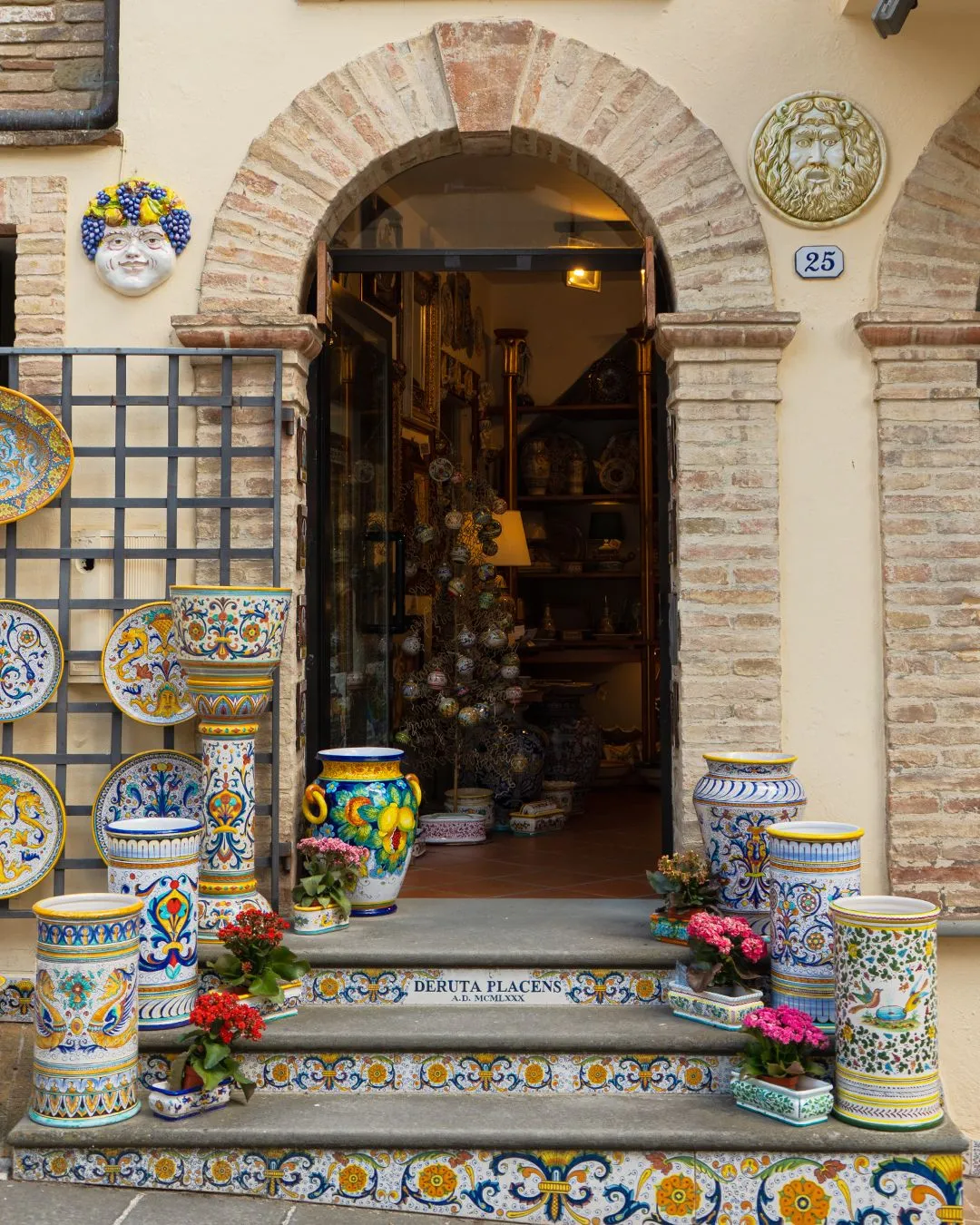
Embracing a Slower Rhythm
Perhaps one of the most valuable things Umbria can offer a destination wedding is not an activity at all, but a different relationship with time.
International weddings bring together people who have often travelled long distances and may rarely have the opportunity to spend several uninterrupted days with one another. Filling every hour with organised experiences can sometimes work against that.
A long welcome dinner, an unplanned afternoon at the venue, a walk before aperitivo or breakfast that extends well into the morning can become just as important as the events on the official programme.
This slower rhythm is closely connected to the way we think about Italian hospitality. It is less about creating constant entertainment and more about creating the conditions for people to enjoy being together.
Conclusion: A Wedding That Belongs to You and to the Place
Getting married in Umbria means choosing a region whose character is shaped by its landscapes, history, craftsmanship and deep connection to local traditions. From medieval villages and countryside estates to seasonal food and the warmth of Italian hospitality, these elements offer much more than a beautiful setting: they can become an integral part of the wedding experience.
Yet there is no single way to celebrate a wedding in Umbria. Every couple brings their own story, cultural background, traditions and personal vision, and these should never be lost in an attempt to recreate a particular idea of an Italian wedding. Instead, they can find a natural expression alongside the identity of the place, creating something that feels both personal and connected to its surroundings.
For us at Romantica Italia, this is what makes planning a destination wedding so rewarding: finding the right balance between who you are and the place you have chosen to celebrate. A wedding that reflects your story while embracing the culture, people and traditions of Umbria — and could not have been created in quite the same way anywhere else.
GET IN TOUCH